
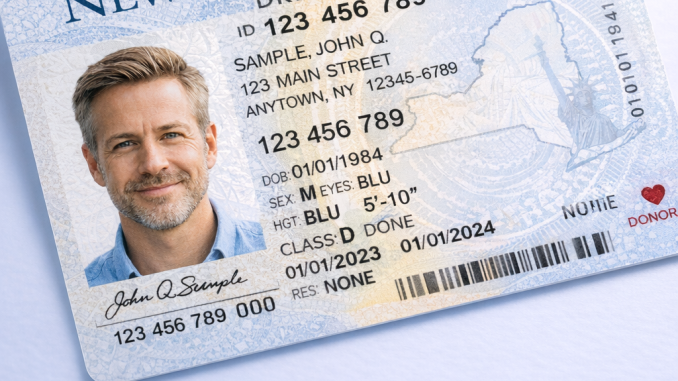
Travel has become both easier and more complicated over the years. Booking a flight can take minutes, but new identification rules, security procedures, and travel disruptions can quickly turn a simple trip into a stressful experience if you’re not prepared. One of the most common sources of confusion for U.S. travelers today is the Real ID requirement. I hope that I can help you to understand the details of Real ID and how it differs from an Enhanced ID. And whether you really need it if you plan to travel.
In this post I’ll break down Real ID vs. Enhanced ID, explain how they affect air and border travel, and share some tips to help you move through airports and destinations more comfortably.
What Is Real ID?
Real ID is a secure, federal standard for state-issued driver’s licenses and identification cards. It was created after the passage of the Real ID Act to establish minimum security standards for IDs used for federal purposes like air travel.
A Real ID-compliant card looks similar to a standard driver’s license but includes a star marking (usually gold or black) in the top corner. This star indicates that the card meets federal identity verification standards.
Why Real ID Matters
Travelers need a Real ID-compliant license (or another acceptable form of identification, such as a passport) to:
- Board domestic flights within the United States
- Enter federal buildings or facilities that require identification
- Access certain military bases
Without a Real ID or an acceptable alternative, you may be denied access at airport security for domestic flights. (And as of February 2026 some airlines and airports are charging incremental fees to get through security screening without a Real ID.)
How to Get a Real ID
To obtain a Real ID, you must visit your state’s Department of Motor Vehicles (DMV) in person and provide specified documents. Usually you will need two or more of the following:
- Proof of identity (birth certificate or passport)
- Proof of Social Security number
- Two proofs of state residency
- Legal name change documentation (if applicable)
Because requirements can vary slightly by state, it’s best to check your local DMV website before your visit. And in some States, like New York where I live, an appointment is required in order to get a Real ID.
What Is an Enhanced ID?
An Enhanced Driver’s License (EDL) or Enhanced ID goes a step beyond Real ID. In addition to meeting federal Real ID standards, it allows for limited international travel.
Enhanced IDs can be used for:
- Land and sea border crossings between the U.S., Canada, Mexico, and parts of the Caribbean
- Re-entry into the United States from these regions (by land or sea only)
An Enhanced ID cannot be used for international air travel. For flights outside the U.S., you still need a passport.
Which States Offer Enhanced IDs?
Not all states issue Enhanced IDs. Only a handful currently do, including:
- Michigan
- Minnesota
- New York
- Vermont
- Washington
If your state doesn’t offer Enhanced IDs, you still need to travel internationally with a Real ID and a passport.
Real ID vs. Enhanced ID: Key Differences
Knowing the differences between Real and Enhanced IDs can help you decide which option makes the most sense for your travel needs.
| Feature | Real ID | Enhanced ID |
| Domestic flights | Yes | Yes |
| Federal buildings | Yes | Yes |
| Land/sea border crossings | No | Yes |
| International flights | No | No (passport required) |
| Availability | All states | Limited states |
Which One Should You Choose?
- It is up to you, but our suggestion is to :
- Choose Real ID if you mainly travel domestically and want the simplest compliance option.
- Choose Enhanced ID if you frequently cross U.S. borders by land or sea and live in a state that offers it.
For many travelers, a passport and a standard or Real ID license provides the most flexibility.
Other Acceptable IDs for Air Travel
Even without a Real ID, travelers can still board domestic flights using other forms of ID, including:
- U.S. passport or passport card
- DHS Trusted Traveler cards (Global Entry, NEXUS, SENTRI, FAST)
- U.S. military ID
Having one of these can be especially helpful if your license is lost, expired, or non-compliant.
NOTE : You should expect longer Security wait times without a Real ID.
General Travel Tips Every Traveler Should Know
1. Arrive Earlier Than You Think You Need To
Airports are unpredictable. Security lines, weather delays, and staffing shortages can appear without warning. Arriving early gives you peace of mind and reduces the likelihood of an unexpected Security nightmare.
- Domestic flights: arrive at least 2 hours early
- International flights: arrive at least 3 hours early
2. Keep Documents Organized
Put together a dedicated travel wallet or pouch to keep your ID, boarding pass, and important documents in one place. Avoid digging through bags at security checkpoints.
3. Understand TSA Rules
Liquids must be in containers of 3.4 ounces or less and placed in a single quart-sized bag. Electronics may need to be removed, depending on the airport and screening type.
If you travel frequently, programs like TSA PreCheck can significantly speed up security screening.
4. Pack Smart and Light
Overpacking leads to baggage fees, lost luggage risk, and slower movement through airports. And overweight bag might be rejected and you’ll have to take things out of your bag just to get on the plane. And you’ll have to stand in line to do so. So, stick to essentials and check airline baggage rules in advance.
5. Plan for Delays
Weather, mechanical issues, and air traffic congestion happen. Download your airline’s app for real-time updates and consider travel insurance for expensive trips.
6. Know Your Destination’s Entry Rules
For international travel, check visa requirements, passport validity rules, and health regulations well before departure. Some countries require passports to be valid for six months beyond your return date just to enter the country.
7. Keep Digital Backups
Store digital copies of your passport, ID, itinerary, and hotel reservations in your phone or cloud storage. This can be a lifesaver if documents are lost or stolen.
Stay Calm and Flexible
Even with perfect preparation, travel doesn’t always go as planned. Flights get canceled, connections are missed, and plans change. Staying flexible and calm can make a huge difference in how stressful the experience feels.
Build extra time into itineraries, keep expectations realistic, and remember that most problems have solutions—even if they’re inconvenient in the moment.
Frequently Asked Questions (FAQ)
Do I need a Real ID to fly domestically?
Yes, you will need a Real ID-compliant license or another acceptable form of identification, such as a passport, to board domestic flights once enforcement is fully in place.
Can I use an Enhanced ID instead of a passport?
For land and sea border crossings to certain countries, yes. For international flights, no—a passport is still required.
Is a passport better than Real ID?
A passport offers more flexibility, especially for international travel. However, for domestic flights only, Real ID is sufficient.
Can I have both a Real ID and a passport?
Yes, many travelers choose to have both. This provides backup options and flexibility if one document is lost or unavailable.
What happens if I show up at the airport without Real ID?
If you don’t have a Real ID or another acceptable form of identification, you may be delayed or denied access to airport security.
Are children required to have Real ID?
Children under 18 typically do not need ID for domestic flights when traveling with an adult, but rules can vary by airline.
Travel rules continue to evolve, but a little preparation goes a long way. Understanding Real ID, Enhanced ID, and basic travel best practices can help ensure your next trip is smoother, safer, and far less stressful.